
If you have ever seen cranes working on a busy construction site, you might have noticed how carefully they lift heavy loads. That control does not happen by chance. It comes from smart safety technology like the Load Moment Indicator system. It plays a major role in keeping lifting work safe, balanced, and steady.
This blog will outline the key features of this system in a practical way.
Real Time Load Monitoring
One of the most important features of a Load Moment Indicator system is real time checking. It constantly tracks how much load the crane is lifting and how far it is stretched.
This matters because crane safety is not only about weight, but also about distance. Even a safe weight can become risky if the crane arm is stretched too far.
With real time updates, operators can:
See the exact load weight instantly
Understand current working conditions
Avoid sudden overloading situations
It gives a clear picture of what is happening at every second.
Safe Working Limit Alerts
Every crane has a safe working limit, and this system makes sure you do not cross it without knowing.
When the load comes close to unsafe levels, the system gives alerts. These warnings are made to get the operator’s attention before things become dangerous.
These alerts help in:
Preventing tipping risks
Reducing machine stress
Avoiding costly accidents
It is like having a silent safety guide inside the crane cabin.
Boom Angle and Radius Calculation
Another strong feature is its ability to calculate boom angle and working distance.
Why is this important? Because lifting power changes depending on the crane’s position. A small change in angle can greatly affect stability.
The system continuously tracks:
Boom angle
Working radius
Load balance
This helps operators make safer lifting choices without guessing.
Overload Protection System
A Load Moment Indicator is not just about warnings. It also includes automatic safety control.
When the system detects a serious overload situation, it can activate safety actions such as limiting crane movement or stopping operations.
This feature helps in:
Preventing structural damage
Protecting workers on site
Reducing machine failure risks
It acts as a final safety layer when human reaction time is not enough.
User Friendly Display Interface
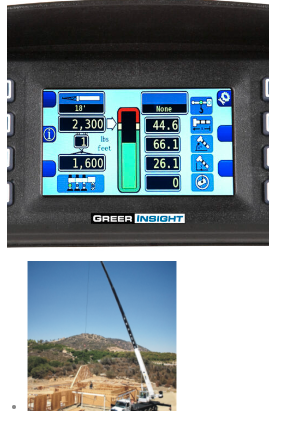
Modern systems are made to be easy to read and understand. The screen in the cabin shows all important information in a clear way.
Operators can quickly see:
Load weight
Safe working level percentage
Crane position status
Warning signals
This simple layout reduces confusion and helps operators stay focused during complex lifting work.
Data Logging and Diagnostics
Many advanced Load Moment Indicator systems also save working data. This is useful for safety checks and maintenance planning.
It helps in:
Tracking crane performance over time
Finding repeated overload patterns
Supporting maintenance planning decisions
This feature improves long term machine health and safe operation.
Why These Features Matter in Real Worksites
On paper, these features may sound technical, but in real construction sites, they make a big difference. A crane often works under pressure, tight schedules, and changing site conditions.
These systems bring clarity in uncertain moments. They reduce human guessing and support safer decisions. That is why they are seen as an important part of modern lifting work.
Summing Up:
Understanding these features helps you see how much engineering goes into crane safety. A Load Moment Indicator is not just a device, it is a complete safety support system that protects both workers and machines. In advanced crane operations, systems like the Mark 4E/2 Load Moment Indicator for Cranes further improve reliability and control, especially in tough lifting conditions.


Write a comment ...